
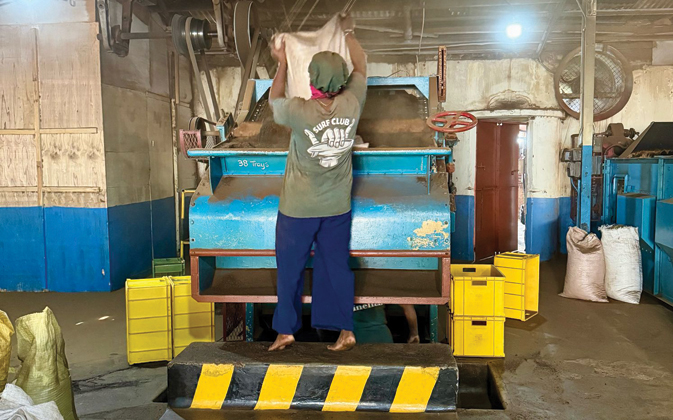
David Walters and Phil James, a process dominated by major cash-rich global companies is failing to deliver safe work, particularly in poorer nations.
There has been a dramatic growth in the economic importance of domestic and cross-border supply chains.
The World Bank estimated in 2020, for example, that more than half of world trade passes through global supply chains (GSCs). The OECD puts the figure higher, at about 70 per cent.
Lead firms in GSCs in the clothing, electronics, retail, and food sectors are linked to the employment of one in three workers in these sectors globally. The working conditions of millions of workers across the world, including many based in low-and medium-income countries (LMICs), are shaped by the business relationships in such chains.1,2
Research highlights how price and delivery demands flowing through supply chains can generate adverse effects in the form of work-related fatalities, injuries and ill-health, especially in labour intensive industries.
Our research showed this harm to be disproportionately suffered by workers in low- and medium-income countries, where standards of work health and safety are poor and inadequately regulated.3
We looked at the range of strategies pursued at the national and international levels, by business organisations, governments and international bodies with the aim of improving health and safety standards within domestic and, more particularly, global supply chains. 3,4,5
Although research is limited, it provides some indications of the value of these strategies in mitigating the negative effects of business dynamics, especially in relation to sector-level actions and worker-centred governance.
The research highlights a serious lack of global leadership in support of ‘what works’ in achieving improved health and safety standards in supply chains. This must be addressed if progress is to be achieved in countering the negative workplace health and safety effects flowing from the business relationships embedded in these chains.
Supply problems
The overwhelming research evidence indicates the growth of supply chains has done little to improve the experience of work health and safety.
Facilitated by new technologies and developments in logistics, outsourcing has been perceived to be more profitable for both public and private sector business organisations because it enables reductions in infrastructural and labour costs, as well as greater flexibility and responsiveness to changing business demands.
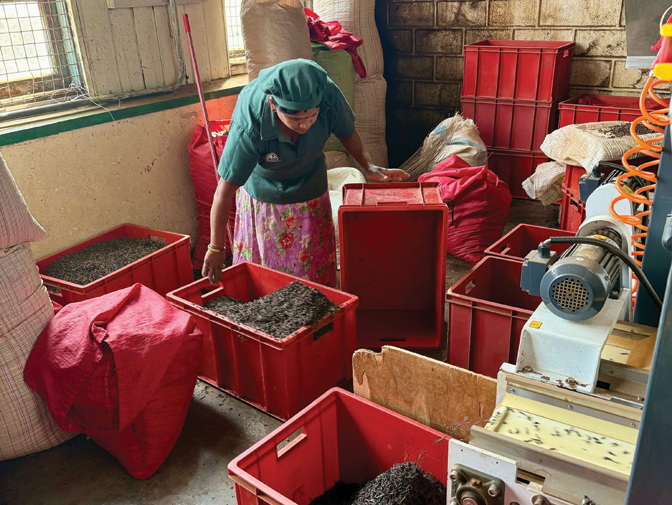 LEAVES WORK Tea workers in India face long hours and low wages producing your morning cuppa.
Meanwhile, on a global scale, such outsourcing is argued to stimulate economic development, growth and world trade. Both domestically and internationally, these developments present enormous challenges for the regulation and management of working conditions that have come to exist at arms-length from the business organisations ultimately responsible for their creation.
A substantial body of evidence attests to this, both in relation to the difficulties it presents for state regulators, and the challenges it poses for workers in organising to resist the exploitation of their bodies. 4
How does it work?
Nowadays, regulatory infrastructures supposedly protecting workers’ health and safety exist in most countries regardless of their economic development. Largely thanks to the effects of International Labour Organisation (ILO) Conventions and Declarations, they are remarkably similar in content and orientation.
But their operation is limited and under-resourced more or less everywhere. As are the resources and capacities of regulatory authorities that are supposed to enforce them. Supply chains compound these regulatory weaknesses by removing from the reach of regulators, those ultimately responsible for the risks of work.
Such ‘regulatory gaps’ are everywhere, but especially problematic in the low and middle-income supplying countries, that are among those bearing the highest burdens of work-related injuries, ill-health and death.6
Numerous initiatives have been developed at national and global levels in response to this regulatory weakness. In the face of global business resistance to regulation in a world economy, responses are largely characterised by ‘soft-law’ approaches which detail desired actions that are neither legally binding or backed up by legal forms of enforcement.
These include writing health and safety standards into trade agreements and putting pressure on lead firms located in advanced economies to exert influence on their suppliers through private codes of conduct and their auditing.
More recently, countries like France and Germany, as well as the EU more widely, have gone further, introducing human rights due diligence laws that strengthen – albeit inadequately – the responsibilities of larger companies towards sub-contractors and workers in their supply chains, regardless of where they are based.7,8
Regulatory disappointment
By far the most common of these approaches are the private corporate regulatory initiatives of lead firms, aimed at getting their suppliers to conform to a range of specified labour standards, including on health and safety.
There is a substantial body of research showing the effects of these efforts to be very mixed and often disappointing. Among the reasons for this are the problems surrounding the effective monitoring and enforcement of compliance, the willingness and capacity of suppliers to comply and the often contradictory motivations of lead firms themselves, in which demands of profitability within supply chains clash with the protection of workers’ wellbeing.
Evidence regarding the ability of the various forms of regulation introduced to combat such limitations is far from comprehensive in nature. Nevertheless, there are indications that each has the potential ability to influence decision-making positively in buyer and/or supplier organisation.
In the case of GSCs, evidence points to the potential value of creating mixed regulatory pathways that encompass combinations of public and private forms of regulation; hard and soft laws (although primarily the latter) and horizontal and vertical forms of influence stemming respectively from the actions of the host countries of suppliers and the home countries of buyers.
Caution is warranted, however, regarding the feasibility of creating such multi-dimensional regulatory pathways given the effective leadership and ‘orchestration’ they require to be effective. While in theory the ILO at the global level constitutes a possible source of such leadership, there is little sign of it being capable in practice of taking on this role.
Despite the optimism generated by a 2016 International Labour Conference resolution9 there has, in the face of employer intransigence, been no progress with an ILO labour standard on decent work in global supply chains.10 There is also little sign of this situation changing in the foreseeable future.
What can workers do?
Individually, and collectively, these non-private forms of regulation crucially ‘bring to the table’ voices whose views and interests are likely to differ from those of buyers and suppliers. They offer potential means of ameliorating the commercial objectives and priorities of buyers and suppliers that undermine private regulatory arrangements and often make their effective operation problematic.
Trade unions/workers’ organisations in home and host states, and the industrial relations procedures they adopt, may, for example, exert their influence in this way through negotiating international framework agreements (IFAs) with lead firms, or by forming alliances with other stakeholders – NGOs, development agencies, international labour standards agencies like the ILO, and development banks – adding further layers of influence to counter the profit driven interests of buyers and suppliers.11
It is clear that the benefits of engaging actors who are independent of supply chain purchasers and suppliers are important.
SEEKING ACCORD Approaches developed in the Bangladesh Accord, and the wider International Accord it led to, can help frame agreements in high-risk sectors and countries, Prof Walters says. more
Approaches developed in the Bangladesh Accord, and the wider International Accord it led to, can help frame agreements in high risk sectors and countries
At an international and sector level, the impact of the Accord on Fire and Building Safety in the Bangladesh garment industry, and the outcomes achieved in a range of countries in the same industry under the ILO’s Better Work programme, clearly show this. Similar evidence is also emerging in publications reporting on projects supported by the ILO’s Vision Zero Fund (VZF).
Admittedly, the roles played by unions (and other mechanisms of worker voice) in these programmes have differed in important respects. Their apparent success cannot be solely be attributed to the provision they make for worker and union involvement given the other distinctive features they encompass.
There nevertheless seems little doubt that their operation has been crucially influenced by the way in which they have enabled a more worker-centred approach.5
None of these programmes can be viewed as panaceas. Their operation and outcomes, however, strongly suggest that unions and other campaigners should be actively seeking the establishment of systems of supply chain regulation that give workers the capacity to challenge the harm-creating business interests of powerful supply chain actors.
That is systems which, in contrast to private corporate regulation, are not under the unilateral control of powerful lead firms.
Elsewhere, unions could reach ‘due diligence’ agreements with employers, as well as requirements on public procurement, that give effect to these same principles, albeit in forms appropriate to the particular circumstances.
More widely, they could also explore the value of shifting statutory health and safety responsibilities onto the controllers of businesses, as opposed to employers, and extending them to cover all those labouring on behalf of a business, regardless of where they are located. In this way they could help to establish a form of domestic supply chain regulation that additionally contains provisions on worker representation.12
Consideration could also be given to seeking the introduction of sector-specific supply chain regulatory frameworks that, among other things, identify where work is being carried out and facilitate union identification of problematic working conditions, as has been done in the Australian textile, clothing, footwear and garment sector.13
Meanwhile, the leadership void at the global level needs to be filled. The ILO remains constitutionally the most appropriate body to implement these principles globally, but it needs to re-discover its original priorities and find better ways to deliver them, so that workers everywhere have rights and protections that ensure their health and safety are not compromised by their work.
References
- Kizu T, Kuhn S and Viegelhan C (2019). Linking jobs in global supply chains to demand. International Labour Review 158, 213–244.
- Amengual M, Distelhorst G and Tobin D (2020). Global purchasing as labor regulation: The missing middle. Industrial Labor Relations Review 73(4), 817–840.
- Walters D, Johnstone R and James P (2024). Effects of economic drivers on work health and safety in global supply chains: A discussion of the effectiveness of regulatory strategies and their economic contexts, Economic and Labour Relations Review,
- Walters D, Johnstone R and James P (2024). The challenge of improving work health and safety in global supply chains: Institutions and evidence of effectiveness. Economic and Industrial Democracy.
- Walters D, Johnstone R and James P (2024) Fundamental principles and realities of practice: work health and safety in low- and middle-income countries, Work in the Global Economy.
- WHO/ILO (2021). WHO/ILO joint estimates of the work-related burden of disease and injury, 2000–2016: global monitoring report, Geneva, World Health Organization/ILO.
- Bright, C. (2021). ‘Mapping human rights due diligence regulations and evaluating their contribution in upholding labour standards in global supply chains’. In Delautre, G., Echeverria Manrique, E. and Fenwick, C. (eds) Decent Work in a globalized economy. Lessons from public and private initiatives. Geneva: ILO, 75-108.
- Torres-Cortés, F., Salinier, C., Deringer, H., Bright, C. et al. (eds). 2020. Study for the European Commission on Due Diligence Requirements through the Supply Chain. Part III: Final Report, Luxembourg: Publications Office of the European Union.
- ILO. (2016). Report of the committee on decent work in global supply chains: Resolution and conclusions submitted for adoption by the Conference. International Labour Organisation.
- Thomas, H and Anner, M. (2023). Dissensus and Deadlock in the Evolution of Labour Governance: Global Supply Chains and the International Labour Organization (ILO). Journal of Business Ethics 184:33–49
- Hammer N (2023). Searching for institutions: upgrading, private compliance and due diligence in European apparel chains. Transfer 29(3), 371–386.
- Johnstone, R. 2017. Regulating Health and Safety in ‘Vertically Disintegrated’ Work Arrangements: The Example of Supply Chains. In Howe, J., Chapman, A. and Landau, I. (Eds), The Evolving Project of Labour Law: Foundations, Development and Future Directions. Federation Press, Sydney: 130–144.
- Nossar, I., Johnstone, R., Macklin, A and Rawling, M. 2015. Protective Legal Regulation for Home Based Workers in the Australian Textile, Clothing and Footwear Industry. Journal of Industrial Relations, 57: 585–603.
MAKING GLOBAL TRADE SAFER
Approaches developed in the Bangladesh Accord, and the wider International Accord it led to, and which were created after pressure from global unions UNI and IndustriALL, working with ILO, can help frame agreements in high-risk sectors and countries by:
WORK IN CHAINS
Over the last half century, businesses have placed increased reliance on the provision of goods and services from other organisations based in their home countries or overseas. But, warns work environment professors David Walters and Phil James, a process dominated by major cash-rich global companies is failing to deliver safe work, particularly in poorer nations.
| Contents | |
| • | Introduction |
| • | Supply problems |
| • | How does it work? |
| • | Regulatory disappointment |
| • | What can workers do? |
| • | References |
| • | Making global trade safer |
| Hazards webpages | |
| • | Working world |