
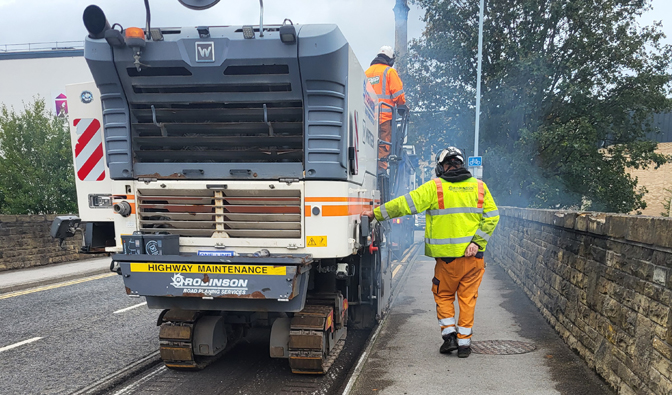
He started his job in a West Yorkshire quarry in the early 1990s, drilling, sawing and dressing sandstone.
The clouds of respirable crystalline silica (RCS) dust suspended in the quarry air and that glistened in the cutting sheds was a part of the job, like the noise from the industrial stone cutting saws and stone dressing machines.
The worker, who has asked not to be named, said it was not until the late 2000s, almost two decades into his employment, that personal protective equipment was introduced. Before that, no respiratory protective equipment was provided to the 20 to 30 workers in the cutting sheds. You worked the stone, breathed the dust and went home. Fine dust caked your hair, nostrils, skin, clothes, stuck in your throat.
By the time the masks arrived, the long-term damage had already been done.
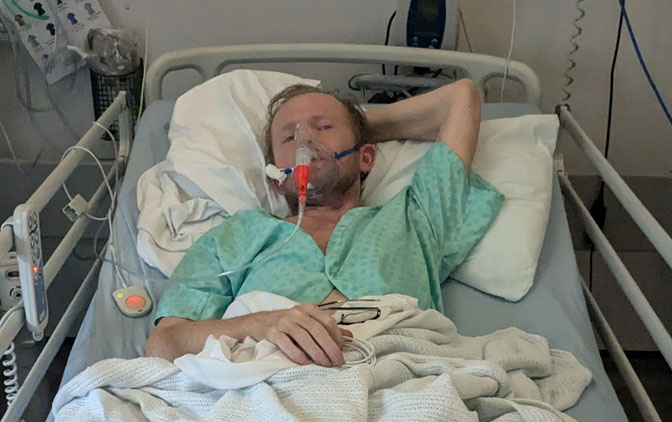
Now in his early 50s, the silica dust he breathed over 30 years in the industry is turning his lungs to stone.
From being fit for a working life of heavy, manual labour, he found himself constantly struggling for breath. He was always tired.
The condition, his doctors say, is ‘progressive’.
Once the tell-tale scarring that revealed he had silicosis had started to mottle his lungs, it inevitably worsens remorselessly, even though he’ll never get to work in dust again.
He is at ‘significant’ risk of developing complicated silicosis or occupational COPD (chronic obstructive pulmonary disease) by his early sixties, the doctors say, and he faces a ‘measurable’ risk of lung cancer and renal disease.
 HSE INQUEST The growing pile of victims of silicosis shows HSE’s complacent silica strategy has failed, with awful consequences. Will coroners increase the pressure on HSE to act, and introduce a safer exposure standard for silica and take action on the frightening risks posed by high silica engineered stone? more
His lifestyle is already seriously restricted. So is his life expectancy.
He has been warned the condition could knock five to six years off his life and increase his mortality risk by up to 16 per cent.
After his diagnosis, he turned to his union, Unite, for help. In November 2025, lawyers from Thompsons Solicitors, brought in by Unite to act on his behalf, negotiated a £100,000 out-of-court settlement, without an admission of liability from his former employer and just five days before trial.
Dan Poet, the partner at the law firm who represented him, said: “Our client spent nearly two decades working in conditions that we argue were hazardous to his health, without being given the basic protection that could have prevented this outcome.”
Unite national officer for construction Jason Poulter said: “The gung-ho attitude of employers to exposing workers to inhaling silica dust must end.”
But it has just taken a turn for the worse.
Generation silica
A new generation of victims working with engineered stone are developing rapid onset silicosis, many disabled in their 20s and not living to see middle age. Work with engineered – artificial – stone generates much finer dust that accelerates the damage to the lung.
In November 2025, Thompsons Solicitors chaired a joint meeting of the All-Party Parliamentary Group (APPG) on Occupational Safety and Health in Westminster, bringing together politicians, medical experts, trade unions, and legal specialists to call for a ban on engineered stone and tougher enforcement of existing workplace safety laws. The meeting heard an estimated 1,000 people die of silicosis in the UK every year, with thousands more living with the disease.
But the real extent of the problem could be much worse. DWP industrial injuries disablement benefit (IIDB) statistics show in the decade from 2015 to 2024 there were only 1,170 recognised cases of pneumoconiosis caused mainly by silica – silicosis – or just over 100 cases a year.
The IIDB figures for the decade from 2015 to 2024 record 15 recognised cases of ‘primary carcinoma of the lung with accompanying silicosis’. HSE’s 2012 occupational lung cancer burden study estimates the annual silica-related cancer toll at an average of 789 deaths a year, or about 15 cases each week (Hazards 161).
This suggests barely 10 per cent of real-life silicosis cases end up recognised in the government’s industrial disease assessments, and only one in 500 cases of silica-related cancer.
But new jobs are creating new risks, affecting workers faster and younger. The number of victims may be accelerating.
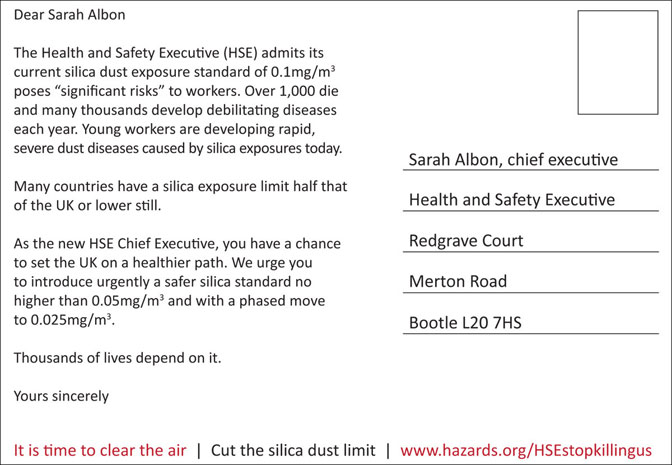 ACTION Don’t swallow HSE’s dust line. Send an e-postcard to HSE demanding it introduce a more protective UK silica exposure limit no higher than 0.05mg/m³ and with a phased move to 0.025mg/m³ or lower.
www.hazards.org/HSEstopkillingus
The Westminster meeting heard evidence that workers as young as 23 are now requiring lung transplants after a few years cutting kitchen worktops manufactured from the artificial, high-silica stone (Hazards 165).
Dr Johanna Feary, consultant in occupational lung disease at the Royal Brompton Hospital told the meeting that since her groundbreaking 2024 paper in the journal Thorax described eight confirmed UK cases (Hazards 167), that number under her care has “increased to 45, with an average age of just 31.”
For HSE, there is little visible evidence the problem is on its radar.
The latest update to HSE’s ‘Silicosis – causes and risk controls’ webpage describes the risks of all the old industries and gives the silica content of different natural stones, but makes no mention of the significantly higher silica content and risks posed by engineered stone.
An April 2026 search of the HSE website resulted in just one hit on either artificial stone or engineered stone, for a webpage that does not make any distinction between the risks posed by natural and artificial stone products.
But the artificial product does not just have a higher silica content, it creates a much finer, much more damaging dust, which can stay suspended in the air for weeks (Hazards 165). Solicitor Daniel Poet noted: “In many of our cases, clients have been exposed to silica dust for only a few years, yet the damage is already severe.”
There is growing recognition of the need for tighter occupational exposure limits – the UK’s limit is twice that in Australia and the US, increasing the silicosis risk by a factor of six (Hazards 168/169) – and for better enforcement and to follow Australia and ban engineered stone.
Even at 0.1mg/m³, the current UK limit, HSE’s own analysis of the risks estimates 30 in every 100 workers exposed over a working lifetime will develop life-sapping silicosis. And that was before the more lethal engineered stone, that kills faster and younger, was factored in.
With around 600,000 silica-exposed workers in the UK, and maybe a quarter of these exposed above the current limit (Hazards 148), this suggests deaths from related cancers, respiratory and other diseases may in reality already number several thousand each year.
“Without action there will be thousands more deaths from silicosis,” said Paul Nowak, general secretary of the TUC.
“The unsafe cutting of high silica stone must be banned – and backed by firm enforcement. Other countries are acting, and Britain must not be left behind.”
Unite’s Jason Poulter said: “We are proud to join the call for a ban on engineered stone and strict dust limits but we are also clear on the need for government legislation to extend the role and influence of union safety reps in defending workers across our industries.”
Will inquests make HSE act on silica?
Marek Marzek died on 30 November 2024 at Whittington Hospital in north London, seven months after being diagnosed with silicosis. He was 48 years old. He had quickly deteriorated from a fit, young man to skeletal and racked with pain, too frail to survive a life-extending lung transplant.
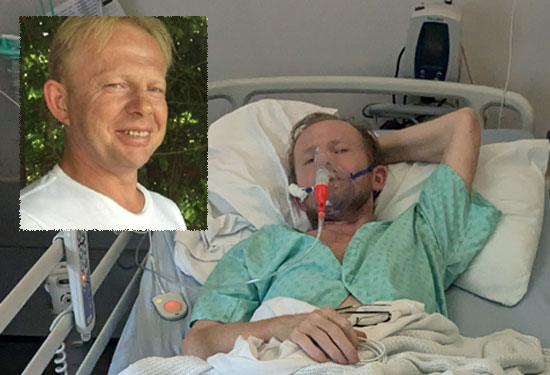
The father of two young daughters had worked for 12 years in London and Hertfordshire with engineered stone made almost entirely of silica. He described working in a ‘tornado’ of ultrafine dust (Hazards 167). A pre-inquest review hearing into his death, where he was represented by Ewan Tant of law firm Leigh Day, took place before senior coroner for Inner North London, Mary Hassell, on 16 February 2026.
The Health and Safety Executive (HSE) has so far ignored calls from occupational lung specialists, occupational hygienists, unions and those affected by silicosis to reduce the occupational exposure limit for silica. Nor has it done anything substantive to address the new threat of rapid onset, severe disease known to be caused by engineered stone.
But as more die, more coroners may question HSE’s inaction. An October 2024 coroner’s Prevention of Future Deaths report was issued to HSE regarding the death of engineered stone worker Wassam al Jundi, who died from silicosis aged 28 in May 2024. He had worked in the industry for just eight years (Hazards 168/169).
He would have been dead for seven years before HSE’s recommendation to start health surveillance kicked in after 15 years exposure. The coroner told HSE it had the ‘power’ to address a problem with ‘a risk of death’.
HSE though offered just more of the same, telling the coroner it would “continue to work with industry stakeholders to raise awareness of managing the risks from exposures to respirable crystalline silica.”
The growing pile of bodies shows it is an HSE strategy that has failed, with awful consequences. By the time the inquest into Marek’s death reconvenes, it is to be hoped HSE recognises its intransigence is prolonging the pain.
STONE DEAF
Thousands could be dying each year from conditions caused by exposure to silica at work. But Hazards editor Rory O’Neill reveals only a tiny fraction are recognised officially. And he warns the Health and Safety Executive (HSE) is ignoring devastating evidence of this emerging tragedy.
| Contents | |
| • | Introduction |
| • | Generation silica |
| • | Will inquests make HSE act on silica? |
| Hazards webpages | |
| • | Silica |